
We Uses Cookies
This website uses cookies to enhance
your browsing experience.
We Uses Cookies
This website uses cookies to enhance
your browsing experience.
At its core, "Szédült Lány" is a character study. The "dizzy girl" of the title represents a archetype of youth—someone caught between the innocence of childhood and the chaotic allure of newfound freedom. The instrumentation, characterized by bright synthesizer layers and a driving rhythm section, mimics the lighthearted yet frantic pace of the girl's life. It captures a sense of "joie de vivre" that was prevalent in the Hungarian music industry as it began to embrace more Westernized production styles and themes.
The track "Szédült Lány" (Dizzy Girl) by Mang Levy is a vibrant example of the early 1990s Hungarian pop-rock scene, blending a catchy, melodic hook with the era's signature upbeat energy. Though Mang Levy remained a somewhat niche name compared to the titans of Hungarian rock, this particular song stands out for its evocative lyricism and its embodiment of the cultural transitions occurring in Hungary during the post-communist period. Mang Levy - SzГ©dГјlt LГЎny
The lyrical narrative explores the themes of restlessness and the search for identity. The word "szédült" (dizzy or lightheaded) functions as a metaphor for the disorientation of coming-of-age in a world that is rapidly changing. While the melody feels carefree, there is an underlying sense of transience; the song describes a figure who is always in motion, perhaps running toward a dream or away from a mundane reality. This duality makes the song more than just a danceable hit; it reflects the collective psyche of a generation navigating a landscape where the old rules had disappeared, but the new ones were not yet written. At its core, "Szédült Lány" is a character study
Musically, the song utilizes a standard verse-chorus structure that prioritizes accessibility. The chorus is designed to be an earworm, utilizing simple harmonic progressions that allow the listener to focus on the vocal performance. Mang Levy’s delivery is earnest and warm, providing a grounded contrast to the "dizzy" subject matter. The production reflects the technological bridge of the early 90s, where traditional guitar-driven rock was beginning to merge with electronic textures, creating a sound that felt both nostalgic and forward-looking. It captures a sense of "joie de vivre"
Ultimately, "Szédült Lány" serves as a sonic time capsule. It highlights the ability of Hungarian artists to take universal themes of youth and rebellion and translate them through a unique local lens. For the modern listener, the song offers a window into a specific moment of optimism and musical experimentation, reminding us that even the most "dizzy" and fleeting moments of youth can be captured and preserved through the power of a well-crafted pop song.
At its core, "Szédült Lány" is a character study. The "dizzy girl" of the title represents a archetype of youth—someone caught between the innocence of childhood and the chaotic allure of newfound freedom. The instrumentation, characterized by bright synthesizer layers and a driving rhythm section, mimics the lighthearted yet frantic pace of the girl's life. It captures a sense of "joie de vivre" that was prevalent in the Hungarian music industry as it began to embrace more Westernized production styles and themes.
The track "Szédült Lány" (Dizzy Girl) by Mang Levy is a vibrant example of the early 1990s Hungarian pop-rock scene, blending a catchy, melodic hook with the era's signature upbeat energy. Though Mang Levy remained a somewhat niche name compared to the titans of Hungarian rock, this particular song stands out for its evocative lyricism and its embodiment of the cultural transitions occurring in Hungary during the post-communist period.
The lyrical narrative explores the themes of restlessness and the search for identity. The word "szédült" (dizzy or lightheaded) functions as a metaphor for the disorientation of coming-of-age in a world that is rapidly changing. While the melody feels carefree, there is an underlying sense of transience; the song describes a figure who is always in motion, perhaps running toward a dream or away from a mundane reality. This duality makes the song more than just a danceable hit; it reflects the collective psyche of a generation navigating a landscape where the old rules had disappeared, but the new ones were not yet written.
Musically, the song utilizes a standard verse-chorus structure that prioritizes accessibility. The chorus is designed to be an earworm, utilizing simple harmonic progressions that allow the listener to focus on the vocal performance. Mang Levy’s delivery is earnest and warm, providing a grounded contrast to the "dizzy" subject matter. The production reflects the technological bridge of the early 90s, where traditional guitar-driven rock was beginning to merge with electronic textures, creating a sound that felt both nostalgic and forward-looking.
Ultimately, "Szédült Lány" serves as a sonic time capsule. It highlights the ability of Hungarian artists to take universal themes of youth and rebellion and translate them through a unique local lens. For the modern listener, the song offers a window into a specific moment of optimism and musical experimentation, reminding us that even the most "dizzy" and fleeting moments of youth can be captured and preserved through the power of a well-crafted pop song.
About JVG Electronics
Thankyou for contacting us.
We deals in all types of video games, consoles and its accessories.
We provide genuine produts.
You can say a complete shop of gaming available at one place.
JVG ELECTRONICS Since 2005
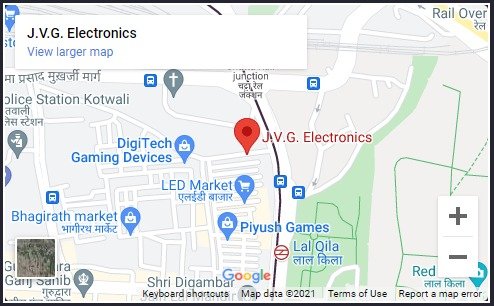
JVG ELECTRONICS Stall no.-32A More sarai road, Old lajpat rai market, Chandni chowk, Near Lal quila metro station gate no.-2 Delhi - 110006
,
,
,
Pay Using





Download Our App
© 2026 Prime Forge
